
The story in five minutes
A summary of the whole book, piece by piece. Each piece opens only once you have reached it in the bar above; the rest stays hidden unless you choose to see it, knowing it will spoil the story.
The narrator's room, with a lamp in your hand. Whatever glints in its light can be found: the book's figures, motifs and secrets, only as far as you have read.
There are wounds in life that, like leprosy, slowly eat away at the soul in solitude.
Best with headphones. Sound stays off until you turn it on.
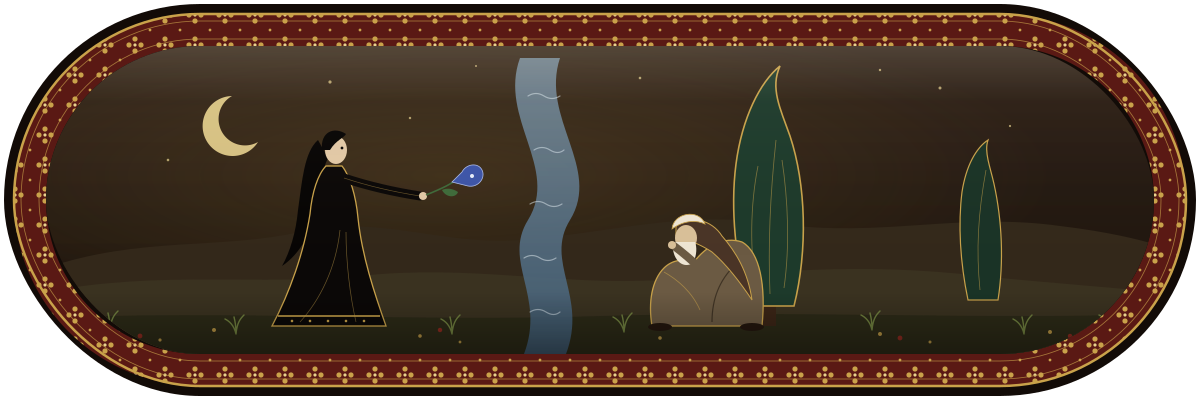
This book is about death, isolation and despair. If you are going through a hard time yourself, ways to find help are at the bottom of this page.
Where are you in the book?
Nothing beyond the point you have reached is shown.
The notes for this book didn't load. Reload the page to try again.
A summary of the whole book, piece by piece. Each piece opens only once you have reached it in the bar above; the rest stays hidden unless you choose to see it, knowing it will spoil the story.
The Blind Owl is not a straight line. It has two parts that face each other like two mirrors, and its time turns in a circle instead of moving forward.
Most people in the book have no name, and they resemble one another. The gold threads show the likenesses. Choose a face to see what the text says and how readers take it.
Almost anything you meet in part one comes back in another form in part two. This table shows where each motif appears.
The companion only sees the notes opened up to where you are, so it cannot give away what comes next. Every answer says whether it comes from the text or from readers' interpretations.
A few things about the author and his time that make the reading easier.
The map of figures opens exactly as far as you see it on the page, so you can print it without spoiling anything.
The Blind Owl speaks of loneliness and the wish to die, and reading it can be heavy. If you are thinking about hurting yourself or feel there is no way out, talk to someone. Contact a local crisis line or your emergency number; findahelpline.com lists free, confidential services in most countries. In Iran, call 1480 or 123, and 115 in an emergency.
Every figure, motif and prepared question lives in one knowledge file, tagged with the point in the book from which it may be seen. The page and the companion both read from that file, and before any notes reach the model, the server removes everything you have not reached yet. This is the first book in a series Rayasa is building for reading difficult books.